Solo Murni Expands Packaging Business with More Than 20 Komori Presses
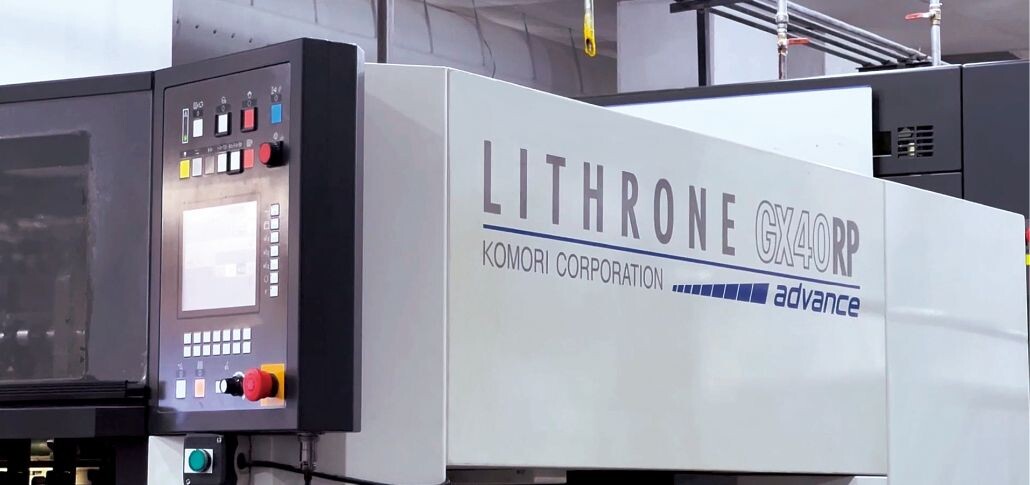
Indonesia, Solo Murni | Lithrone G44 advance [GL-644A], Lithrone GX40RP advance [GLX-840RP-A]
04 September 2026
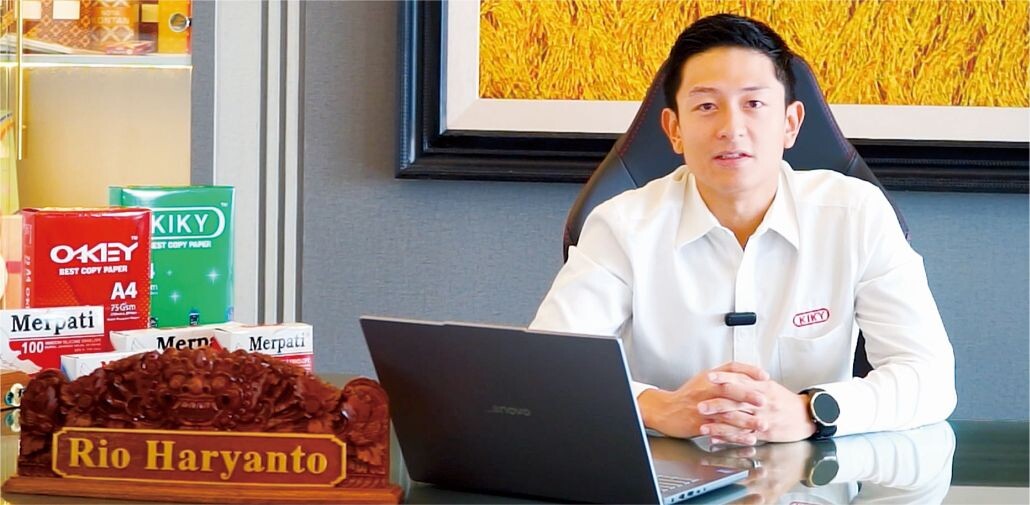
More than 20 Komori presses are currently in operation at Solo Murni. Most recently, the company installed four new presses, including a six-color Lithrone G44 advance, significantly increasing its production capacity.
Director, Rio Haryanto
PT. SOLO MURNI (Indonesia): More Than 20 Komori Presses Supporting Packaging Business Expansion
-
Founded in 1976 by Mr. Sinyo Haryanto in Central Java, Indonesia, Solo Murni has grown into one of the country's leading manufacturers of stationery and packaging products. Today, the company employs approximately 4,500 people. Its proprietary brands, including the widely recognized KiKy brand, are sold both domestically and internationally. The company produces more than 400 products, including notebooks, planners, memo pads, wrapping paper, gift boxes, envelopes, and a wide range of packaging products.
As demand for packaging has grown rapidly since 2018, Solo Murni has strengthened its focus on the packaging business and continued to expand its packaging product portfolio.
"Our strengths lie in our high print quality, strong design capabilities, and unwavering commitment to our customers," says Mr. Rio Haryanto, Director of Solo Murni and son of the company's founder, Mr. Sinyo Haryanto. "Our products are distributed throughout Indonesia and exported to more than 13 countries around the world.

-
Investing in Equipment to Improve Print Quality and Productivity
Rio Haryanto explains, "To offer a wide variety of products and designs, we first need to achieve the highest possible print quality. That is why we installed our first Komori press in 2010. Since then, we have been impressed by the machine performance, continuous technological innovation, high-quality service, and Komori's commitment to supporting our business. We have become strong supporters of the Komori brand."
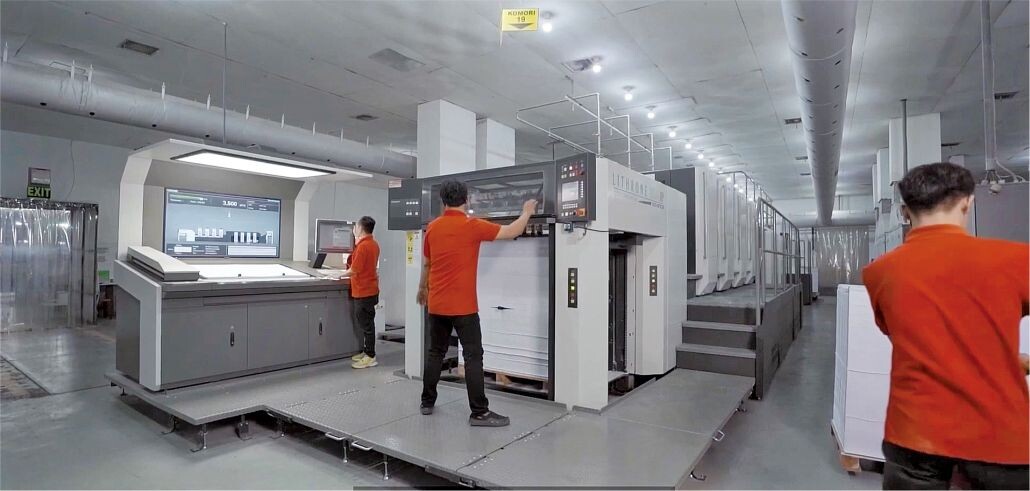
Today, Solo Murni operates more than 20 Komori presses in a variety of configurations, ranging from four-color to six-color and eight-color models, including the Lithrone G44 advance. This extensive press lineup supports the company's large-scale production operations.
Speaking about the benefits of the investment, Rio says, "Since introducing Komori presses, our production capacity has increased significantly. We have improved operational efficiency and greatly reduced waste. We are very satisfied with the performance of the presses, and our print quality continues to improve. Looking ahead, we will continue developing new products while also exploring opportunities to enter the large-format packaging printing market."
-
Operators' Confidence in Komori Presses
Sri Wahyudi, Printing Manager, comments, "Komori presses are very easy to operate. We can save the air settings for the feeder and delivery and quickly recall them for repeat jobs. Even when changing the printing speed from 10,000 sph to 15,000 sph, we can simply load the previous job settings, which gives us confidence when switching between jobs."

- Printing Manager Sri Wahyudi
-
He continues, "KHS-AI (Advanced Interface) also helps reduce paper waste. The press reaches stable production conditions from the start, and ink supply is maintained at the optimal level. For repeat jobs, color quickly matches the target standard, so very little time is needed for color adjustment. By recalling saved job data, we can reach the target color using only about 150 sheets. During production runs, press speed remains highly stable, and Komori presses consistently deliver both stable productivity and color quality. As long as roller settings and nip pressure are maintained according to specifications, color remains stable even at high printing speeds."
Regarding operation and management functions, Sri adds, "The PQC (Print Quality Control) interface is intuitive and easy to understand, making it very user-friendly for operators. In the latest version of PQC, key information such as ink fountain key openings can be displayed in text and numerical values, further improving usability.
In addition, the PDC-SX (Spectral Print Density Control - SX model) enables operators to perform register adjustments and color management with ease. Measurement results are displayed numerically, and adjustment results are reflected immediately, allowing us to maintain print stability throughout production. The speed of color adjustment and setting changes is especially impressive. Because various settings can be saved and recalled whenever needed, overall operational efficiency has improved significantly."
Solo Murni continues to pursue greater production efficiency while expanding its business for future growth.