Establishment of Tsukuba Plant
“Technology and Challenges as Seen Through Komori’s 100-Year History” Series (Part 6)
24 August 2026
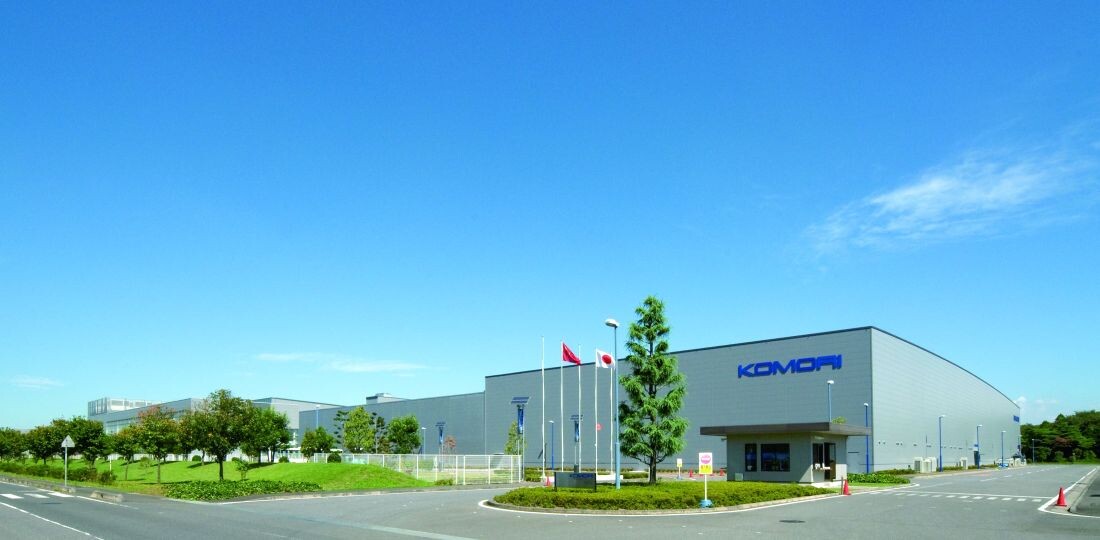
In this series, "Technologies and Challenges Through 100 Years of Komori," we spotlight key technological innovations and business milestones from our century-long history. This article looks back at the birth of the Tsukuba Plant, which established a world-class printing press production system, and traces its evolution over the years.
●The functions of the Toride and Sekiyado Plants were gradually relocated, culminating in the completion of the world's only plant capable of producing sheetfed offset, web offset, and banknote presses on a single production line in 2009.
●To strengthen production, Komori set five priorities: quality and reliability, speed and efficiency, communication, environmental responsibility, and human resource development.
●Through just-in-time manufacturing, task assurance, and full printing tests, Komori improved quality, reduced costs, and shortened lead times, establishing "Tsukuba Quality."
●Komori promotes solar power, energy-saving equipment, and zero emissions, while strengthening technology development, training, and services through KGC and the Global Parts Center.
Aiming to Become the World's Premier Press Production Facility
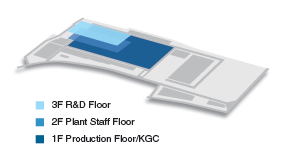
Spanning approximately 185,000 m² in site area and boasting a total floor area of 63,800 m², the Tsukuba Plant stands as a colossal production base. Beyond its factory, it encompasses a research facility, demonstration center, training center, and other essential facilities, completed in 2009. Komori steadfastly upholds the highest standards of quality and reliability, the cornerstone of manufacturing excellence. Komori's vision extends beyond this, aspiring to pioneer the world's foremost press production system, enriching the market with unparalleled Kando.
Relocation and consolidation of major plants
Enhancing the manufacturing structure became an imperative task for Komori. The pivotal shift began in 1990, coinciding with the Company's transition from Komori Printing Machine Works to Komori Corporation.
At the forefront of this transformation was the Toride Plant, a cornerstone facility with over three decades of operation. However, signs of deterioration were becoming increasingly evident, posing a threat to production efficiency and the overall working environment. In light of this challenge, Komori embarked on a comprehensive exploration of improvement strategies, ranging from floor space expansion to complete reconstruction or relocation.
Recognizing the limitations of expanding or rebuilding on the existing site, Komori ultimately resolved to pursue relocation as the most viable solution.
Tsukuba City, situated in the southern reaches of Ibaraki Prefecture, emerged as the prime candidate for relocation. Nestled between Toride and Sekiyado, where the main plants are located, its allure amplified following the 1985 International Science and Technology Exposition, colloquially known as the Expo'85. Bolstered by its strategic highway access from Narita Airport, the city garnered substantial attention from major corporations and esteemed entities in the manufacturing sector.
The site boasted impeccable location conditions. Moreover, unlike refurbishing an existing facility, establishing a new plant in the site entailed no disruption to ongoing operations. Consequently, there was unanimous consent within Komori to forge ahead with the new plant in Tsukuba.
To leverage its optimal location and ensure swift and efficient manufacturing operations, a phased approach was adopted to construct and operate the new plant.
In 2002, the initial phase of construction reached its conclusion, marking the inauguration of the Tsukuba Plant by Komori. The Tsukuba Plant began operations by conducting assembly and testing of printing press units made at the Toride Plant prior to shipment. By 2005, after the completion of the second construction phase, the Toride Plant's central operations found a new home at the Tsukuba location. This milestone heralded the establishment of a cutting-edge sheetfed offset printing press facility, boasting the capacity to handle formats of up to 44-inch.
In 2006, Komori orchestrated a grand inauguration of the Tsukuba Plant, extending invitations to esteemed business partners from Japan and across the globe, alongside journalists representing 17 countries. Spanning an impressive 185,000 m² with a sprawling floor area of 38,500 m², the Tsukuba Plant captivated even the most discerning observers within the printing machinery realm, garnering acclaim and astonishment alike. With the completion of the second phase, the R&D Department was also moved to the Tsukuba Plant, making it a pivotal nexus for Komori, housing not just a factory but also a research facility, demonstration center, training center, and welfare amenities.
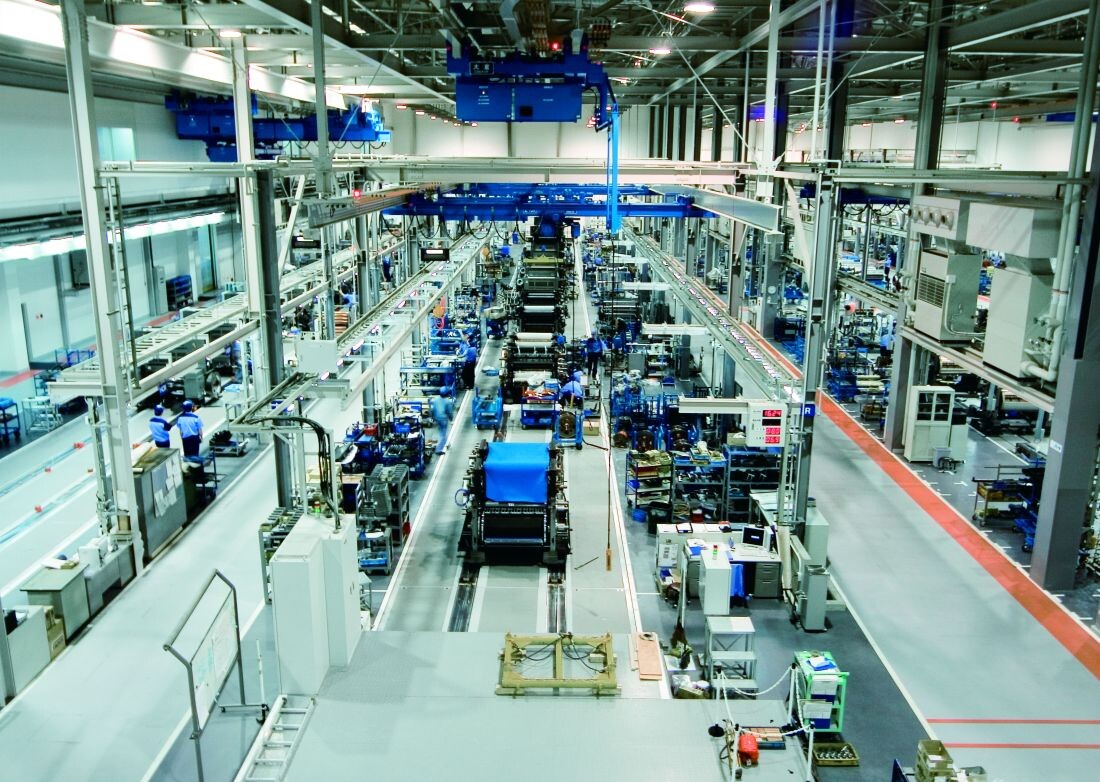
The Tsukuba Plant boasts a new, just-in-time manufacturing system designed to produce exactly just what is needed, when it is needed, and in precisely the right quantities. This approach not only slashes unnecessary inventories and expenses but also significantly shortens manufacturing lead times, enhancing overall efficiency. Furthermore, the plant is equipped with a scalable production system to swiftly respond to the escalating demand for orders both in Japan and abroad. This strategic setup empowers Komori to robustly execute its tailored sales strategies crafted for each distinct region.
Birth of the new Tsukuba Plant
October 1, 2009, marked the completion of the third construction phase, culminating in the establishment of the state-of-the-art Tsukuba Plant. This transformative milestone saw the seamless relocation of all Sekiyado Plant functions, heralding the dawn of a new era. Boasting a sprawling floor area of 63,800 m², a significant expansion from the 38,500 m² footprint achieved in the second phase, the Tsukuba Plant stands unrivaled globally as the sole facility capable of producing sheetfed offset printing presses, web offset presses, and banknote presses on a single, integrated production line.
To establish the world's premier press production system, Komori has defined five key principles: improvement of quality and reliability, pursuit of speed and efficiency, evolution of communication, environmentally responsive use of natural energy, and educating and raising the next generation.
Foremost among these is the commitment to "improvement of quality and reliability." In pursuit of this goal, Komori has invested in stateof-the-art production environments. Facilities and equipment have been expanded to expedite research and development efforts. Additionally, Komori aimed to establish a task assurance system in all processes and a comprehensive printing test system before shipment.
The subsequent focus lies on the "pursuit of speed and efficiency." Through meticulous motion analysis of all processes, the aim was to eradicate waste and irregularities, thus abbreviating manufacturing lead time. To fulfill this objective, Komori established a robust internal and external information network, implemented just-in-time parts management, and expedited and streamlined the entire process from development and design to production and delivery.
The third pivotal objective is the "evolution of communication." Komori sought to evolve and deepen communication channels by envisioning the Tsukuba Plant as an open plant where diverse stakeholders--customers, suppliers, and employees--come together, transforming the plant into a showcase facility, nurturing tightly woven information networks, and advocating for open office spaces.
The fourth objective focuses on the "environmentally responsive use of natural energy," positioning Komori one step ahead of the era. Komori aims to fortify its zero emissions approach by adopting power generation system fueled by natural sources like solar and wind power, pursuing curtail electric power consumption and CO2 emissions, and establishing more than 20 sorting sections.
Lastly, the fifth aspect is "educating and raising the next generation." Komori prioritizes preparing future technical specialists by offering a comprehensive management and technology enhancement environment. This encompasses not only training facilities to refine production skills but also advanced R&D facilities for both basic and advanced research. Furthermore, Komori offers experimental spaces for durability testing and specialized design review rooms.
With the new Tsukuba Plant fully operational, Komori has achieved significant cost advantages. This includes successful reductions in plant expenses and product costs through integration, alongside decreased product costs from consolidating worldwide inventory control. By optimizing efficiency and accelerating development to the fullest extent, all while accumulating expertise in quality enhancement, Komori has established a world-class printing press production system.
Toward the realization of Tsukuba Quality
The Tsukuba Plant, boasting the world's premier press production system, has established the benchmark for Komori to advance to a new developmental stage, epitomized by "Tsukuba Quality."
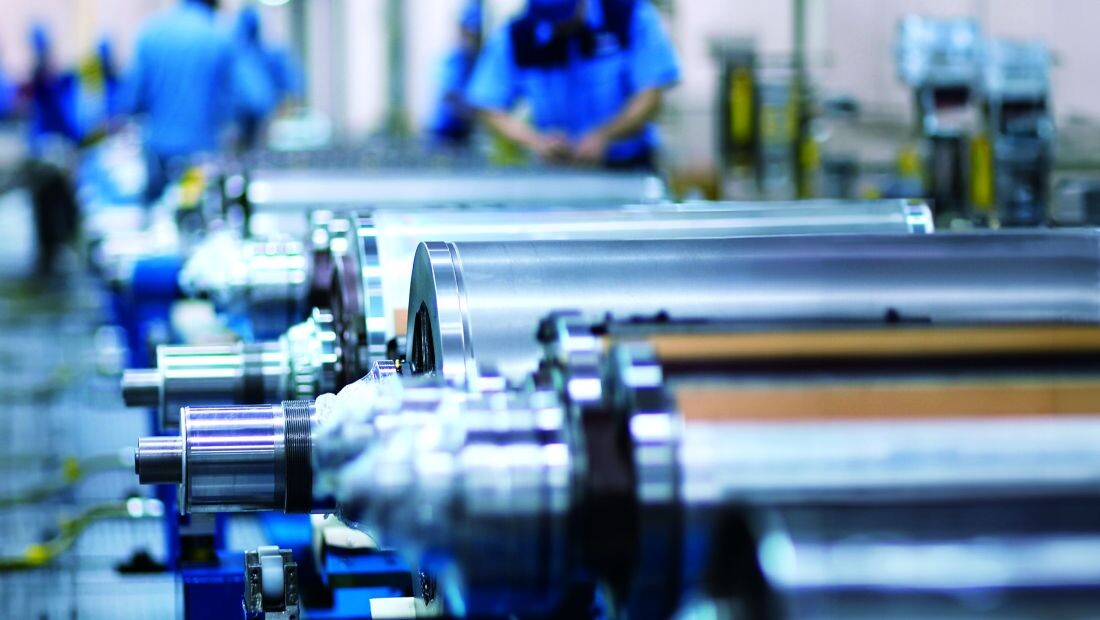
Above all, Komori has prioritized enhancing the reliability of its products. This has been achieved through a reduction in the number of parts. Typically, a single printing press comprises an average of 50,000 parts. By minimizing the number of parts, errors and troubles during manufacturing are reduced, while costs can also be significantly reduced. Moreover, with fewer parts, conducting double and triple checks on post-delivery and operation maintenance becomes feasible, thereby enhancing preventive measures. Guided by this principle, a thorough examination of the optimal number of parts was undertaken.
Moreover, Komori undertook a comprehensive initiative to implement the task assurance system. This system involves carefully inspecting each ongoing process before proceeding to the next, thereby assuming responsibility for certifying the quality. By repeating this assurance for every process, the accuracy of the assurance is enhanced, enabling pinpointing of any issues to the specific process in the unlikely event of a problem. This approach is deemed capable of entirely preventing the outflow of defects.
In addition, it was decided to conduct a full printing test before shipment. In tests that assume actual printing, only products that have successfully passed numerous checkpoints are approved for shipment.
Furthermore, alongside the quest for improved product reliability, Komori places significant importance on perceptual quality. This encompasses a meticulous focus on the internal visual appearance of the press. While a press with disorderly wiring might not immediately signal quality issues when its cover is opened, an orderly organized layout not only reduce maintenance and repair time but also instills confidence in customers. This commitment to perceptual quality has also spurred cleaning, beautification, and orderliness initiatives at the Tsukuba Plant, consistently impressing visitors with its well-organized environment.
As a leading Eco Factory
The Tsukuba Plant stands amidst a verdant landscape adorned with thousands of trees that grace its premises. More significantly, the plant exemplifies a commitment to environmental stewardship, employing facilities designed for sustainability, including the utilization of natural energy and energy-efficient equipment. To mitigate its environmental footprint, the plant has implemented several key systems. Solar power generation and energy-efficient heat sources for air conditioning have been integrated to minimize environmental impact across the facility and office spaces. In addition, an operational power monitoring system has been installed in the machining area, enabling regular reviews of operational methods to reduce electricity consumption. With the introduction of a recycling system for lubricating oil used in machining and printing press, all oil used in trial runs and adjustments is filtered, regenerated into clean lubricating oil, and reused repeatedly.
The systematic collection and meticulous separation of waste generated during the manufacturing process, categorized by material, are standard procedures. All wooden pallets used for delivery are diligently collected, and efforts are made to thoroughly reuse plastic pallets, with the overarching aim of achieving a 100% recycling rate and zero emissions.
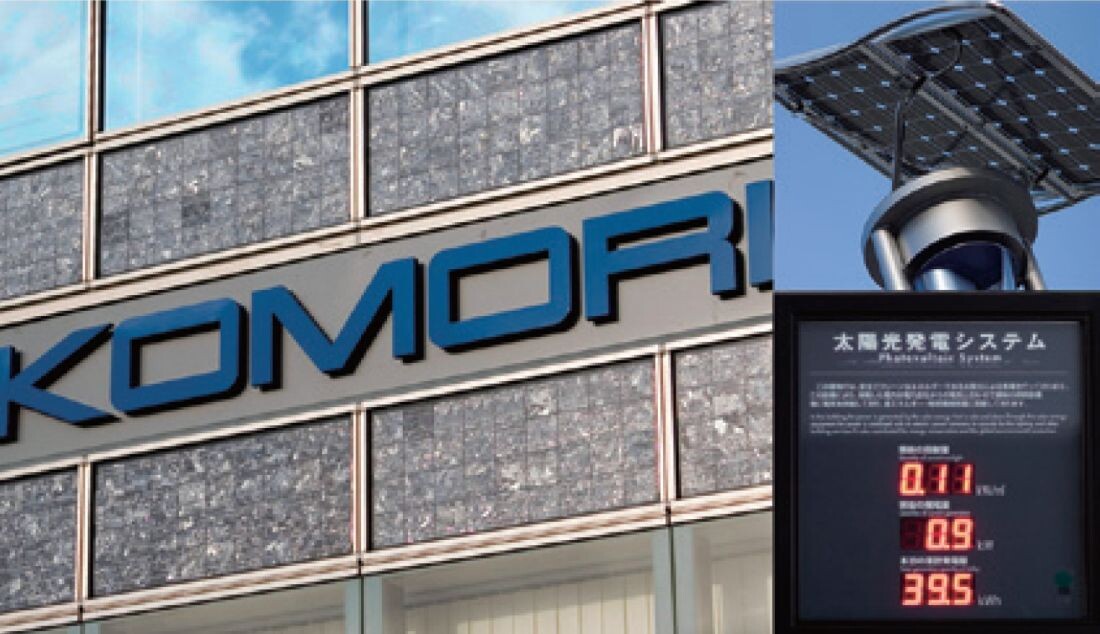
Most notably, the Tsukuba Plant installed solar panels in 2016. Covering an area roughly equivalent to a soccer field, the plant's roof hosts 2,016 solar power generation modules. With an installed capacity of 534.2 kWh, the system generates enough electricity to power 142 general households, effectively covering 5% of the Tsukuba Plant's electricity needs.
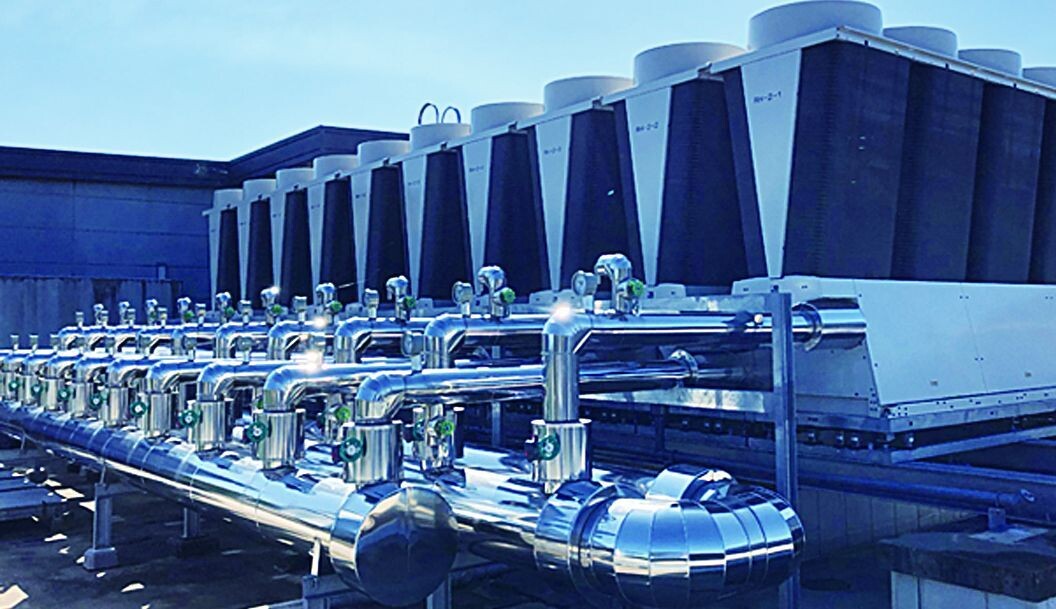
Another significant aspect is the implementation of an energy-efficient air conditioning system. In 2018, the plant upgraded to an air-cooled heat pump chiller, recognized by the Ministry of the Environment for its top-tier energy conservation. This upgrade resulted in a substantial reduction of approximately 35% in the Tsukuba Plant's overall gas consumption.
Continuing its journey toward environmental excellence, the Tsukuba Plant remains committed to evolving as the world's premier press production facility while prioritizing environmental responsiveness.
These initiatives are still being updated.
For more details on the latest release, visit the link. https://www.komori.com/en/global/information/news/2026/0406_401.html
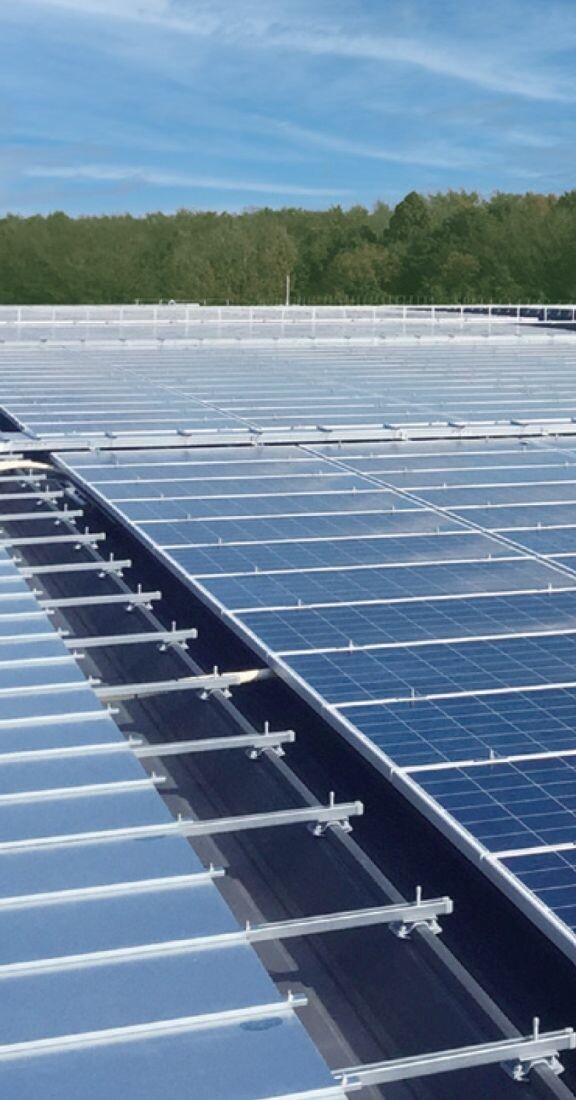
Solar power generation modules covering an area equivalent to a soccer field
Solar panels are also mounted on the walls
Air-cooled heat pump chiller certified by the Ministry of the Environment as the highest level of energy conservation