The Reliable Technology of Lithrone: Best-Selling Sheetfed Presses that Took the World by Storm
“Technology and Challenges as Seen Through Komori’s 100-Year History” Series (Part 1)
23 April 2026
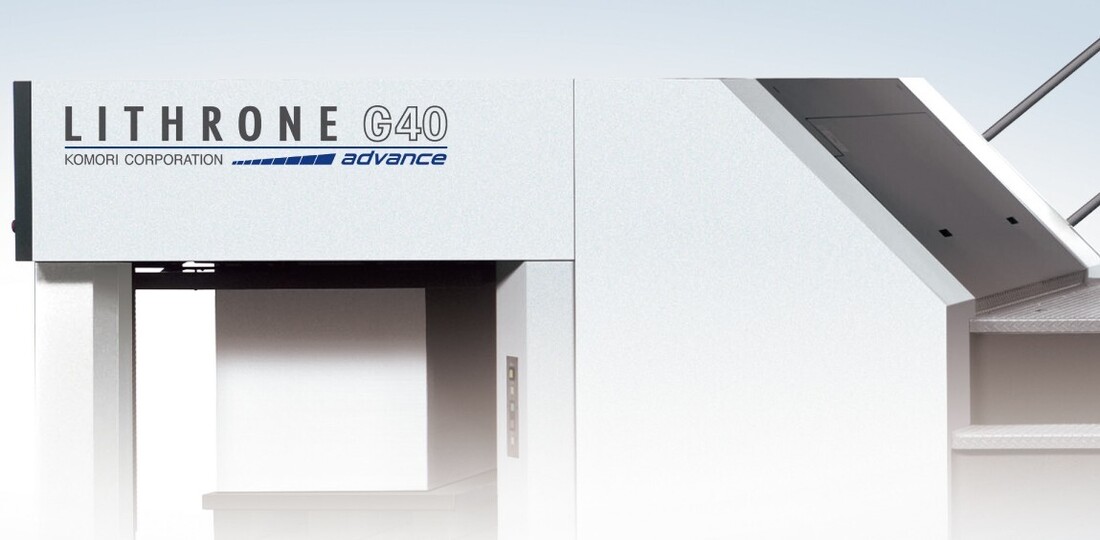
In this series, "Technologies and Challenges Through 100 Years of Komori," we spotlight key technological innovations and business milestones from our century-long history. In this article, we trace the origins and evolution of the best-selling sheetfed press, the Lithrone series, which has surpassed 10,000 units sold worldwide.
●In 1981, Komori launched its first original sheetfed press, the "Lithrone 40".
●With features such as PQC (Print Quality Control) and APC (Automatic Plate Changer), it improved productivity and reduced costs, enhancing printing efficiency.
●A diverse lineup and rapid updates expanded its market, surpassing 10,000 units sold by 1999.
●Structural and component innovations enabled world-class performance at 18,000 sheets per hour.
●The eco-friendly "Lithrone GX/G advance" series delivers energy efficiency, high quality, and fast turnaround, driving sustainable printing.
"Technology and Challenges as Seen Through Komori's 100-Year History" Series (Part 1)
The Lithrone series by Komori began in 1981 with the offset sheetfed printing press "Lithrone 40." Through numerous updates, it has grown into a bestselling series with over 10,000 units sold worldwide. Leveraging proprietary technologies, it achieves high speed, high quality, and environmental performance. Equipped with advanced features such as PQC (Print Quality Control) and APC (Automatic Plate Changer), these presses have contributed to improving productivity and reducing costs in the printing industry. Today, Komori offers a diverse lineup, including the "Lithrone GX/G advance" series, which delivers world-class ROI (return on investment), and continues to earn high praise from printing companies around the globe.
Since its debut in 1981, the Lithrone series has remained a long-seller. The extensive lineup from compact to large presses is a flagship series for Komori. Even today, the Lithrone series of next-generation sheetfed presses with advanced systems and high-tech mechanisms remain a driver for Komori to communicate to the world its technological capabilities and brand power. The Lithrone series name is derived from "lithography" and "throne" .
Lithrone changed the history of printing presses
The development of Lithrone offset sheetfed printing presses started with the successor models to the KONY SUPER 9 and KONY SUPER 10 in 1979. The development concept was "development of a Komori-original sheetfed press." Previous models have been developed primarily by referring to presses made in Germany, but for the Lithrone, Komori sought to also incorporate technologies that it independently developed to create sheetfed presses featuring in-house technology. In the background to this was a desire to create strategic presses that could demonstrate Komori's design and technological capabilities to the world and enter markets in Europe and the U.S.
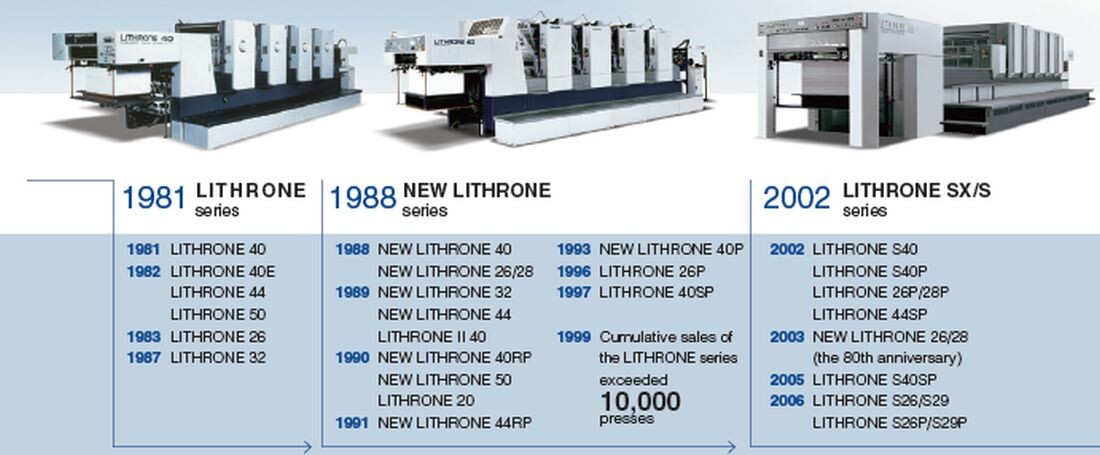
The first model was the Lithrone 40, a 40-inch press announced in 1981. It was a high-speed sheetfed press with a maximum printing speed of 13,000 sheets per hour, and it attracted attention as a model that could respond to the high demand in global markets for 40-inch presses. The Lithrone 40 with a Print Quality Control (PQC) system that enabled remote operation from an operation console, and the Komorimatic, a continuous dampening system as standard equipment was displayed at IGAS'81 in September 1981, generating a huge response. That year, Komori's sales increased 15% in Japan and 61% overseas year on year, and the Lithrone was the driving force behind that growth.
This was taken as a turning point, and Komori began working on creating a series of Lithrone models. The following year, Komori developed the Lithrone 40E, which was specialized for single-color and two-color printing. The 44-inch Lithrone 44, A0-size Lithrone 50, and Lithrone 40P, which could be used for both single-sided and double-sided printing, were announced, completing a lineup ranging from medium-sized to large presses. The 26-inch Lithrone 26 press was announced in 1983, followed by the 32-inch Lithrone 32, which greatly reduced print makeready time, in 1989. In this way, a series of five models was established, and the following year, total sales since the initial creation of the Lithrone series surpassed 3,000 presses.
Sales exceed 10,000 presses
Komori upgraded the Lithrone series starting in 1988 and released the 26-inch and 28-inch NEW Lithrone 26 and NEW Lithrone 28 and the 40-inch NEW Lithrone 40, followed by the 32-inch NEW Lithrone 32 and 44-inch NEW Lithrone 44 in 1989, and the 50-inch NEW Lithrone 50 in 1990. Standard production of each model included two-color to six-color presses. The NEW Lithrone was the first instance in the domestic offset printing press industry that a leading model was completely redesigned in such a short period. It was created from a development concept that prioritized customer needs and advanced technological capabilities, and as a result, the NEW Lithrone gained overwhelming support in Japan and overseas.
The NEW Lithrone 40 equipped with an Automatic Plate Changer (APC) and Automatic Make-Ready (AMR) system; 40-inch NEW Lithrone 40RP, capable of printing multiple colors on the front and single color on the back; 20-inch Lithrone 20 high-quality color press; 40-inch Lithrone II 40 two-color press with perfecting mechanism; and other models, were displayed at DRUPA90, attracting attention from printers around the world. Later, Komori developed multi-color convertible perfecting presses through a process of repeated trial and error, completing the NEW Lithrone 40P four-color perfecting press in 1993, which was further advanced to create a six-color model and an eight-color model in 1996.
The development of presses that could print in full color on both sides in a single pass made substantial contributions to higher productivity. This lineup of Lithrone series models led to an expansion of its share in the global market, and in 1999 cumulative sales exceeded 10,000 presses, making it a worldwide bestseller series in name and reality.
Pursuing 18,000 sheets per hour
At DRUPA90, when the NEW Lithrone 40 was introduced, the German manufacturers displayed an even faster sheetfed press with a speed of 15,000 sheets per hour. This was a time when, like in F1 racing, there was competition using the speed of the press as an indicator to emphasize technological prowess. Technological innovation was needed in terms of both job changeover and high-speed production, and the need increased year by year. For Komori to compete successfully against the world's leading printing press manufacturers, increasing printing speed was an unavoidable issue. It was thought that there were still issues relating to increasing the speed of the NEW Lithrone 40 from 14,300 sheets per hour, including the durability of the base press. To address this, by 1993, the 70th anniversary of its founding, Komori set a target of developing a press with the speed of 15,000 sheets per hour, a level suitable for a full-scale market launch, and made technology improvements to achieve this target. When the speed of a printing press was increased on a trial basis, it was found that wear, damage, and deformation of components in various parts of the press would occur, leading to printing errors, making this challenge more difficult than expected. Despite this, Komori combined its development and manufacturing capabilities and persistently created prototypes, and repeatedly conducted test printings. The NEW Lithrone 40, a 70th anniversary commemorative model with 15,000 sheets per hour specifications, was successfully developed and completed in 1993 and was put on display at IGAS'93 and other exhibitions.
Later, it was felt that the limits of performance had been reached with existing structures, and a project to develop the cutting-edge SUPER Lithrone sheetfed press with specifications that exceeded those of the Lithrone 40 was launched. Exceptional personnel from various divisions were appointed to the project. Following about a year and a half of verifying a prototype model completed in 2000, the fully redesigned Lithrone S40 was announced in 2002. More than 70% of the components used in this model had been newly designed, and it supported IT and digitalization, achieved high print quality, boasted excellent operability, safety, and durability, reduced environmental impact, and had other noteworthy features. The maximum printing speed was 16,000 sheets per hour, and when combined with automation systems developed for earlier Lithrone models, it contributed to reducing costs and ensuring the profitability of printing companies.
The Lithrone SX40, a model with even higher performance than the Lithrone S40, was developed in 2008. This high-productivity model retained the functionality of the Lithrone S40 and was equipped with the KHS-AI (Advanced Interface), a newly developed full Automatic Plate Changer (APC) and other mechanisms. With a maximum paper width of 1,050 mm, it was positioned as Komori's flagship model. It was the first press to achieve a maximum printing speed of 18,000 sheets per hour, and numerous challenges had to be overcome to achieve this speed. By conducting extensive research on various attributes including the feeder and delivery mechanisms and ink roller placement and performing innumerable tests, Komori successfully opened the door to the world's highest speed sheetfed printing press.
Development of environmentally friendly Lithrone models
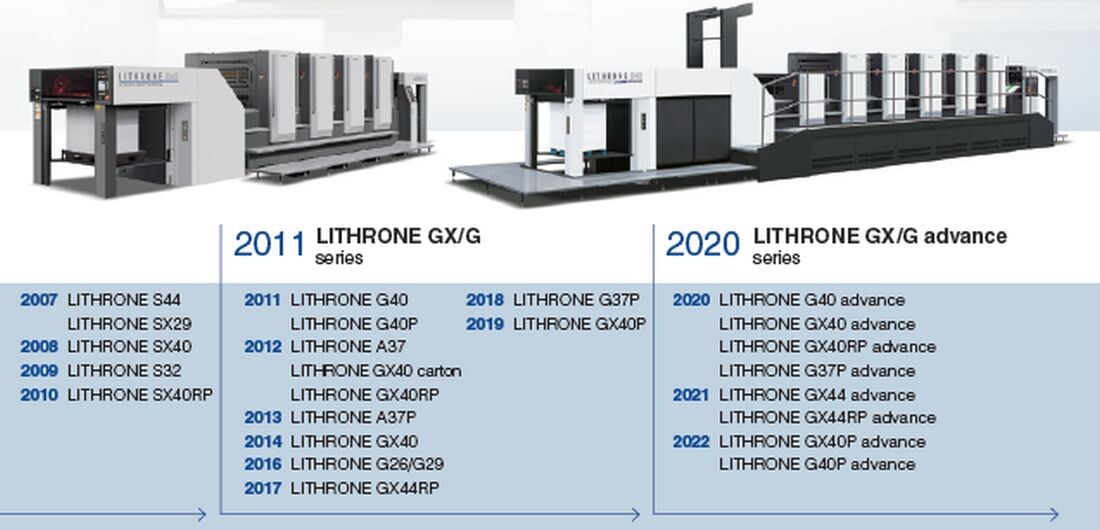
The 40-inch Lithrone G40, which was launched in 2011, was marketed as a high-grade press that supported reduced environmental impact. The use of the letter "G" in the product name was intended to convey the meaning of "green" for being environmentally friendly and "great" for pursuing high performance. The maximum printing speed was set at 16,500 sheets per hour. In terms of environmental burdens, compared to earlier presses, the Lithrone G40 reduced electricity consumption by 6%, paper wastage by 55%, carbon dioxide emissions by about 20%, and shortened print preparation time by approximately 40%. Furthermore, when combined with the KHS-AI, H-UV (high-sensitivity ultraviolet curing system), automated control system and other mechanisms, it achieved high quality and low cost and supported short run and short delivery times, combining ecology and economy. Komori later filled out the lineup with the Lithrone G40P with a perfecting mechanism, the Lithrone G40 carton specialized for heavy stock, the 40-inch Lithrone GX40RP double-sided multi-color press, and the 40-inch Lithrone GX40 with a maximum print speed of 18,000 sheets per hour. In addition, makeready time can be dramatically shortened by equipping these models with the A-APC (Asynchronous Automatic Plate Changer), which was developed with the aim of further reducing changeover times, an area where Komori excels, and a parallel control function that switches operation during each automatic cleaning process.
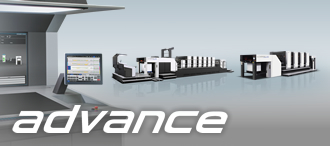
In 2020, the COVID-19 pandemic brought about drastic changes in social and economic conditions, and drupa2020 was postponed. That year, Komori announced the Lithrone GX/G advance series (comprising a total of eight models), which further improved the Lithrone GX/G series. As presses that provided return on investment (ROI) at the world's highest levels, these series were intended to achieve higher productivity, a management issue for printing companies. Komori reviewed and upgraded the fundamental performance of earlier models in three core areas: a feeder/delivery mechanism that achieved stable feeding and delivery from thin paper to heavy stock, an improved Komorimatic dampening system that ensured stable printing quality even at high print speeds, and the PQC operating system, which significantly improved operability by linking to KP-Connect.
In addition, by combining these models with automatic control functions for color and registration during printing using the PQA-S (Print Quality Assessment System for Sheetfed), models with the highest levels of performance within the existing Lithrone were created. At the same time, as a part of its efforts concerning package printing, an area where future growth was expected, Komori developed a lineup of outstanding long printing presses including ink roller-independent drive and APC for coaters and multi-coater units based on the Lithrone GX, as well as various equipment configurations for shortening makeready times for spot colors. Komori is also working on the development of Smart Color, which can reproduce colors in spot color areas without changing the ink itself.
Going forward, Komori will create systems that contribute to reduced environmental impact, an area of particular social focus, in the years up to 2030, and will advance presses with particular emphasis on energy savings including next-generation mechanisms that cut electricity consumption during printing operations (announced at drupa2024).
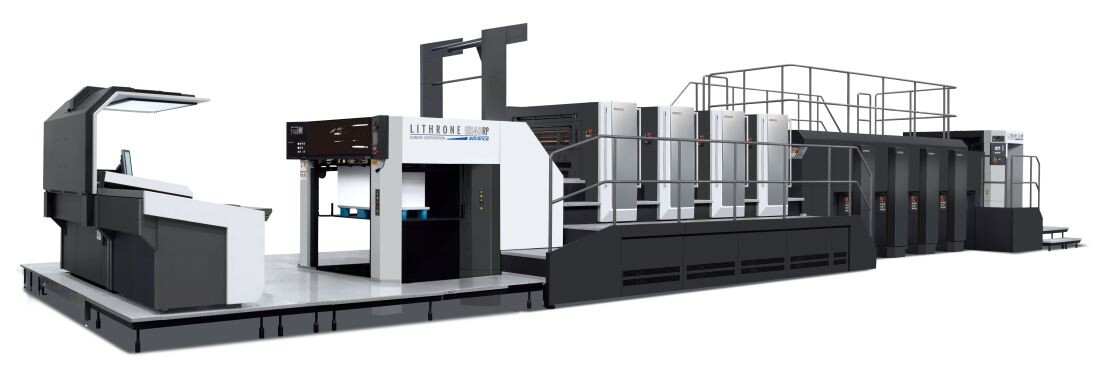
Lithrone GX40RP advance EX Edition
To achieve further productivity growth and sustainable management, Komori has pioneered an eco-friendly offset printing press (Lithrone GX/G advance EX Edition) in 2024.